Ellis Island: Stories from a Gateway to the United States
อ่านบทความนี้เป็นภาษาไทย: Ellis Island: เรื่องราวของประตูสู่สหรัฐอเมริกา
During fall break from my studies in Pittsburgh, I visited New York. The place that interested me most was Ellis Island, because it preserves the history of how people entered the United States.
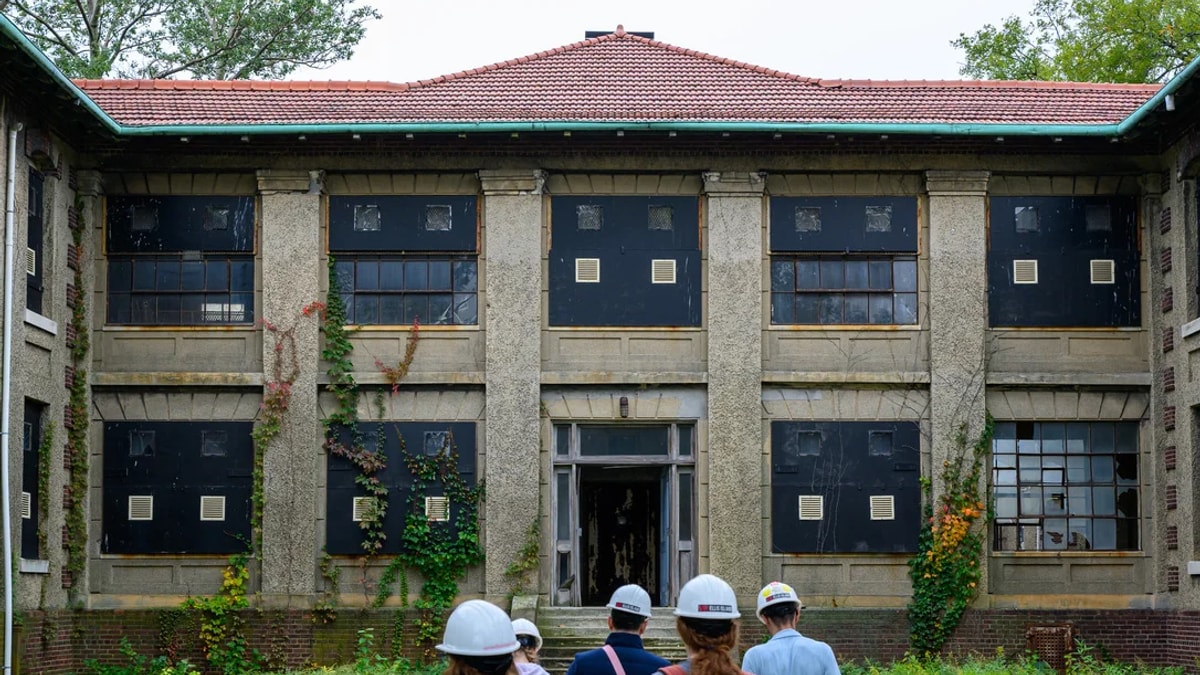
I joined Save Ellis Island’s Hard Hat Tour, which takes visitors through the deteriorating hospital buildings on the south side of the island. [1] There were peeling walls, old equipment, and rooms where you could still see how patients had been cared for. With my background in preventive and travel medicine, I was especially interested in the design: the large windows, the sinks, and the unusually long corridors connecting the wards.
The guide invited us to see these spaces through the eyes of the people who had passed through them. They had just arrived in a new country, and an illness could bring everything they had planned to a halt.
A medical examination with much more at stake
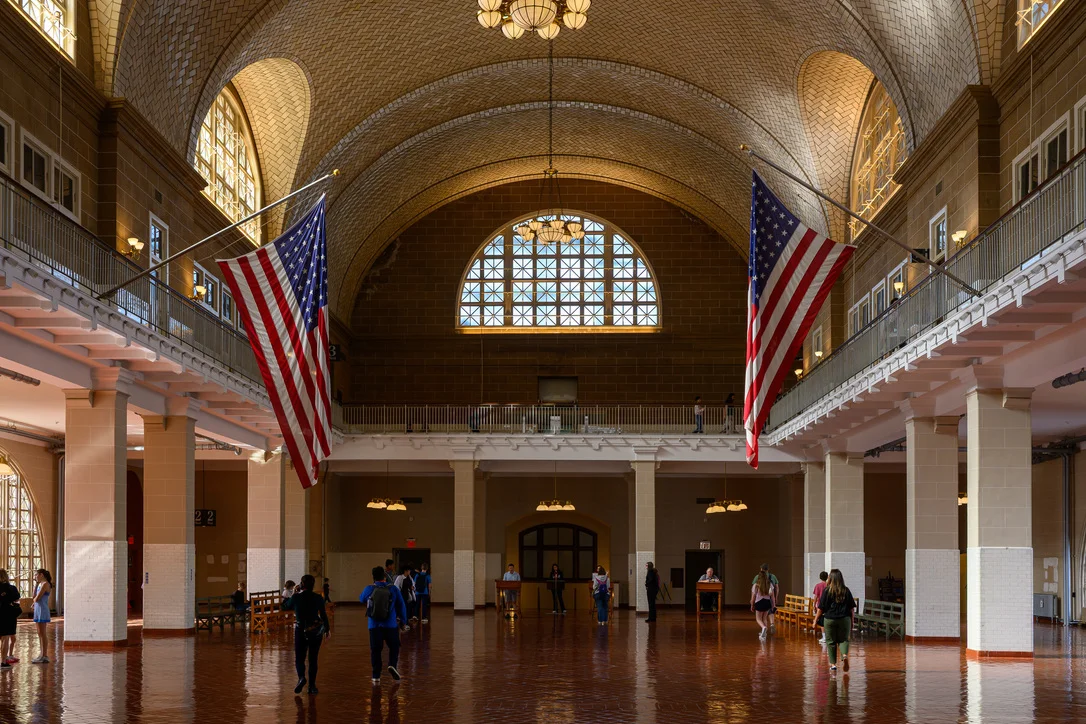
The room in the Main Building is the Registry Room, also known as the Great Hall. Here, arrivals waited for medical and legal examinations. During the busy years from 1900 to 1924, more than 5,000 people could pass through on a single day. Its arched windows and vaulted ceiling may look beautiful to visitors today; for someone waiting to learn whether they could enter the country, it could be loud, confusing, and frightening. [2]
At Ellis Island, medical inspection was part of the immigration process. U.S. Public Health Service doctors watched arrivals for signs of illness and marked suspected conditions on their clothing with chalk: B for back, F for face, H for heart. A mark directed someone out of line for a closer examination; it was not a diagnosis on its own. People with definite illnesses could be sent to the hospital. The doctors examined, diagnosed, and treated people, while immigration inspectors made the legal decisions about admission to the country. [3]

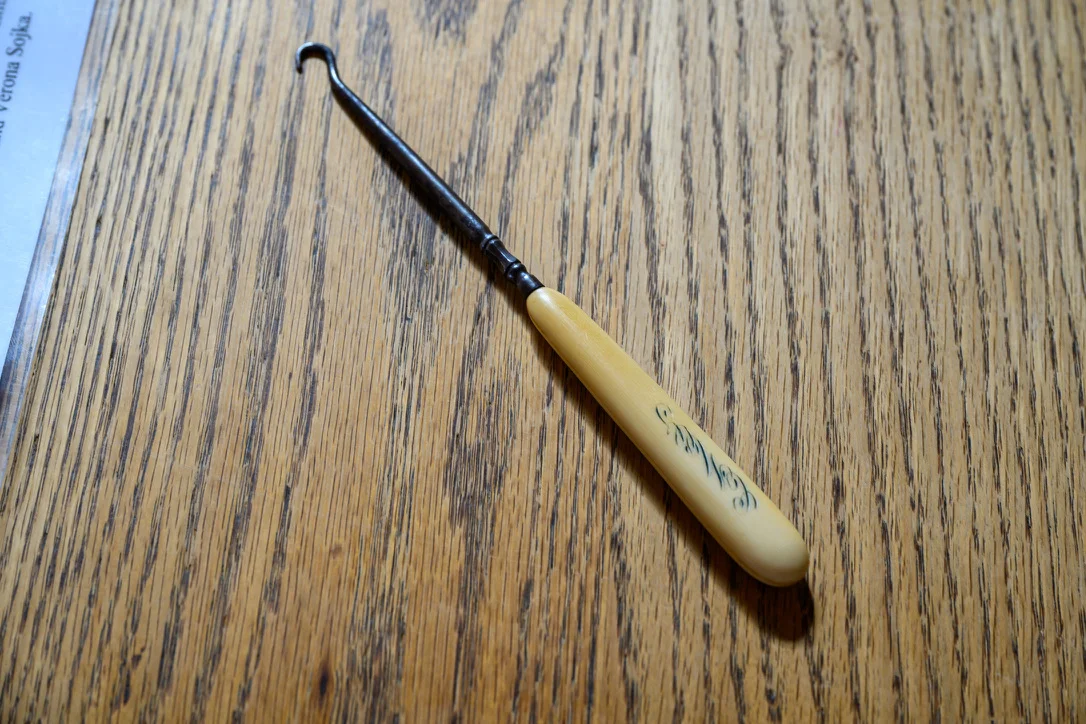
Another object made the examination process easier to picture: a buttonhook. An everyday tool for fastening buttons was also used to turn back the upper eyelid so an examiner could inspect its inner surface for signs of trachoma. The infection, caused by Chlamydia trachomatis, can damage the eyelids and lead to blindness. The eye examination became a particularly feared part of immigration inspection. [4]
The guide also asked us to imagine being separated from family, including children from parents, without knowing how long the hospital stay would last.
One recorded account is that of Josephine Garzieri, later Calloway, who arrived at Ellis Island with trachoma. She faced being sent back, but received treatment after her father found the money to pay for it. Even then, she underwent eleven months of painful treatment before she was allowed to enter the country. [5]
For many arrivals, English was unfamiliar. Ellis Island employed interpreters who needed to understand dialects as well as languages; applicants were tested on speaking, reading, writing, and comprehension. Many interpreters were immigrants or children of immigrants themselves. [6] Their work belongs in the story of care. Understanding an explanation matters, especially when the explanation concerns why you cannot leave.
Fun fact: QIC
A simple way to remember an international arrival process is Q → I → C: Quarantine → Immigration → Customs — health checks, immigration, and customs. For departures, you can think of the reverse, C → I → Q, as a memory aid. The actual order depends on the port or airport.
Ellis Island’s system was organised differently. New York Harbor’s shipboard quarantine inspections operated separately near Staten Island, with Hoffman and Swinburne islands used for quarantine and treatment. Ellis Island had its own medical and legal examinations. The connection is the longstanding role of health in crossing a border. [7, 3]
The building was part of the care
The Contagious Disease Hospital, part of the Ellis Island Immigrant Hospital complex, opened in 1911. Its pavilion layout divided patients among separate wards, with individual wards intended to treat one disease at a time. Large windows brought fresh air and daylight into those spaces. This arrangement drew on the hospital-design tradition associated with Florence Nightingale: the physical environment was part of caring for the patient. [8]
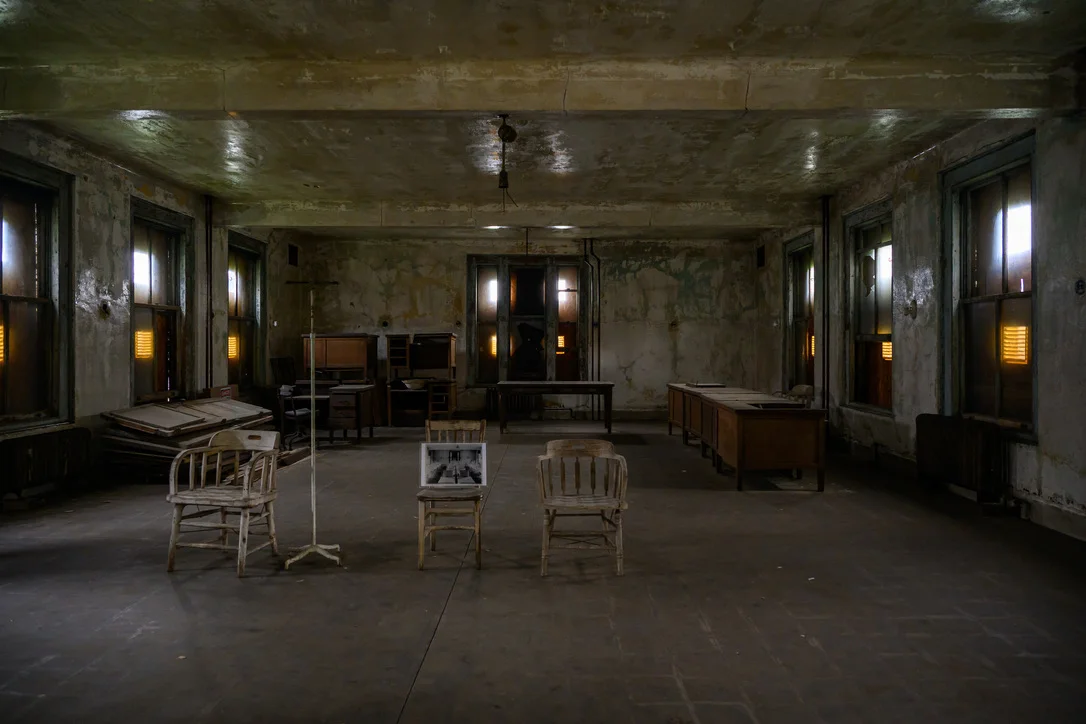
Walking through the wards made those ideas concrete. Before effective antibiotics were widely available, the environment, nursing care, hygiene, and supportive treatment carried enormous importance.
The connecting corridors originally had open sides, but moving patients, staff, and food in very cold weather was difficult. Windows were installed in 1914. [9] The design still had to accommodate ventilation and the everyday work of providing care.
A sink, a laundry room, and the work behind treatment
One of my favourite details was a sink.
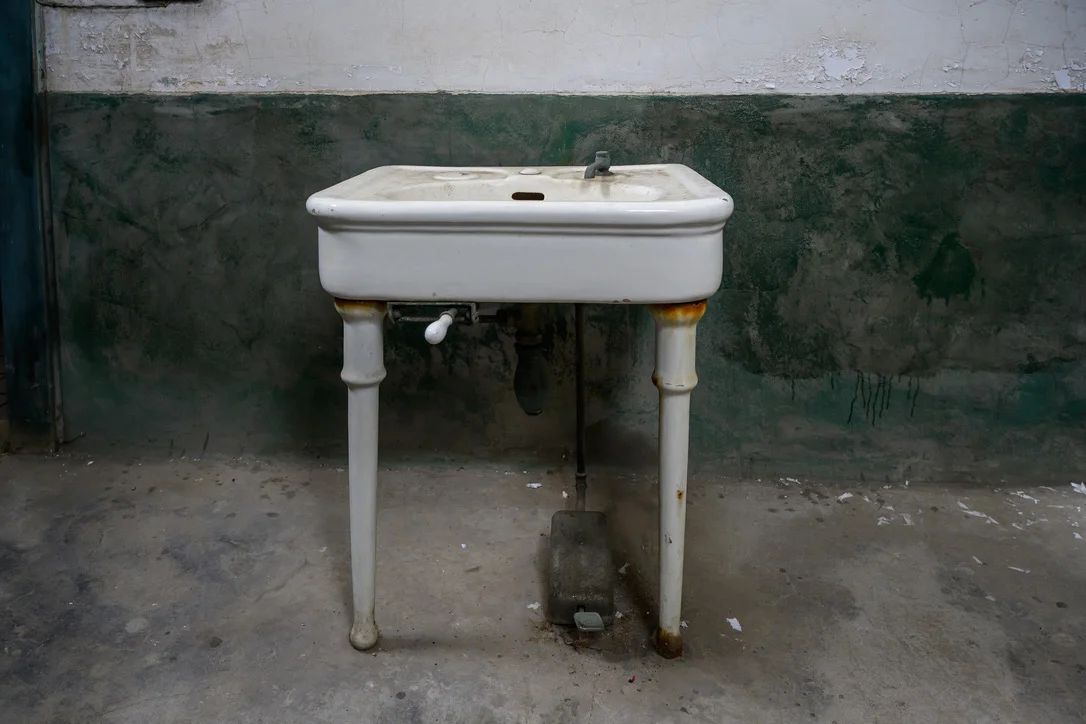
The guide explained how knee and foot controls let staff turn on the water without touching the tap by hand, reflecting the importance of handwashing in patient care.
The laundry room made a similar impression. Much of the original equipment remains in the building, where more than 3,000 pieces of laundry were washed and sanitised daily. [10] Someone had to collect the linen, wash it, and keep supplies moving. Standing beside the machines made the scale of that work easier to picture. Those tasks belong in the story of a hospital alongside examinations and medicines.
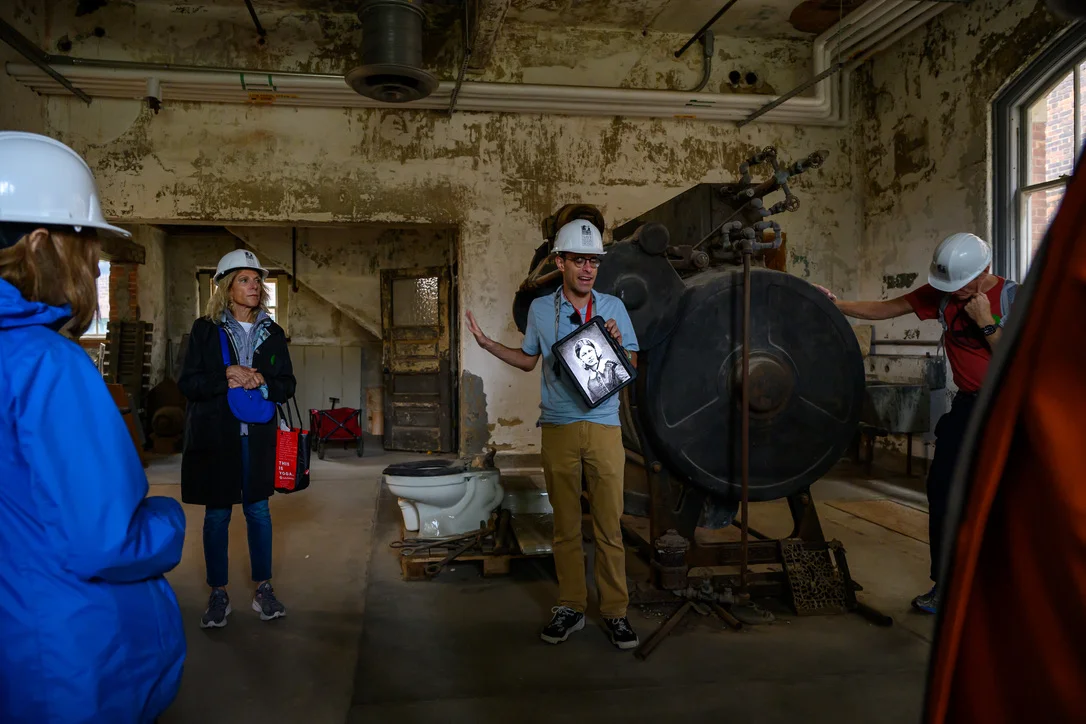
For readers unfamiliar with Florence Nightingale, one of her best-known contributions was her use of data. During the Crimean War, she recorded causes of death at Scutari and used a rose diagram, also called a coxcomb chart, to support calls for improvements in nursing care. [11]
The guide also spoke about the demands placed on nurses. Both male and female nurses were required to live on the island in separate quarters. They could visit New York or New Jersey off duty, but had to return by the midnight staff boat. Jennie “Mother” Colligan worked in the women’s and children’s wards from 1900 into the 1920s, covering day and night shifts. [12] Hospital work shaped the schedules of the people who cared for patients here.
Care inside a system of restriction
The screening of pregnant women was another surprise. The hospital on the island had a maternity ward, operating rooms, and other medical facilities. [13] The guide said that, for a woman about to give birth, conditions here could be safer than in the city at the time. That made me stop and think. I had mainly pictured the island as a place of inspection and isolation; the fact that women gave birth here added another dimension.
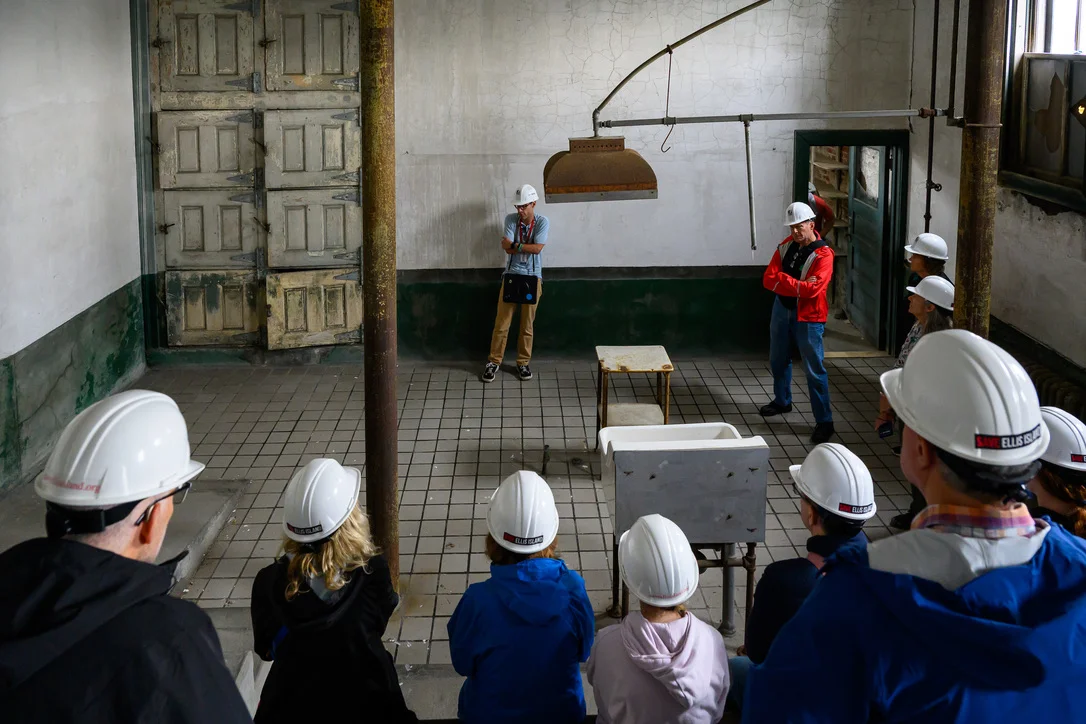
It would be one-sided to tell the hospital’s history only as a success story. The tour also took us to the autopsy room. Save Ellis Island’s educational material records 4,000 deaths among 250,000 patients, or 1.6%. [8]
Patients could receive care while also living under an immigration system that restricted their freedom. The hospital treated illnesses such as measles, scarlet fever, and trachoma on the island, avoiding transfers to hospitals in New York City. Treatment and isolation were also intended to limit the spread of disease into the city. [9]
For me, that raises a question that reaches beyond this particular place: while protecting public health, how do we help the person being isolated understand what is happening, stay connected to family, and retain some control over daily life?
The deteriorating buildings
The buildings also carry the history of their own deterioration. On 29 October 2012, Hurricane Sandy flooded Ellis Island and destroyed electrical, communications, heating, and cooling systems. Reopening the museum a year later required repairs to water and sewage systems, replacement equipment, and arrangements to protect the collection. [14] Preserving a place like this involves the infrastructure that keeps it usable as well as the surfaces a visitor sees. The hospital’s weathered rooms also reflect a longer history of disuse.
The guide introduced Unframed — Ellis Island by JR, who was invited to work here in August 2014. He placed archival photographs of immigrants and staff on the walls and windows of the disused buildings. [15]
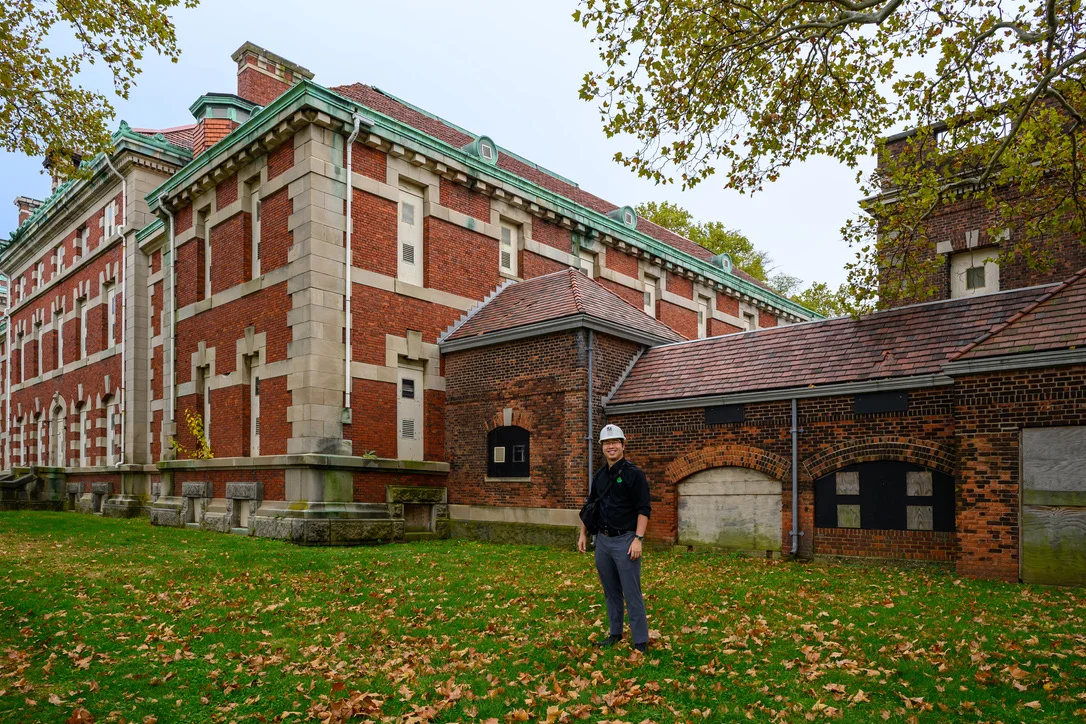
If you would like to spend a little more time with this place, explore JR’s Unframed — Ellis Island gallery. Seeing archival portraits placed inside the hospital rooms brings the people back into view. It is a fitting way to end a visit to buildings whose meaning comes from the lives that passed through them.
References
- Save Ellis Island. Hard Hat Tours.
- National Park Service. Registry Room — Great Hall (2nd Floor).
- National Park Service. Doctor.
- Minshew A. Discovering Trachoma Through Lived Experiences. American Academy of Ophthalmology, Truhlsen–Marmor Museum of the Eye. 15 April 2026.
- National Park Service. Oral Histories. Includes Josephine Garzieri (Calloway).
- National Park Service. Interpreter.
- National Park Service. Quarantine Islands.
- Save Ellis Island. Ellis Island Background Information (PDF). Hospital fact sheet, p. 6.
- Historic American Buildings Survey, National Park Service. Ellis Island, Contagious Disease Hospital Kitchen (PDF). HABS NY-6086-S. Corridor glazing: printed p. 14.
- National Park Service. Ellis Architectural Highlights.
- National Army Museum. Florence Nightingale: The Lady with the Lamp.
- National Park Service. Nurse.
- Historic American Buildings Survey, National Park Service. Ellis Island, Main Hospital (PDF). HABS NY-6086-G. Maternity ward listed on printed p. 2.
- National Park Service. Ellis Island to Reopen, One Year after Sandy; Repair Work Continues. 24 October 2013.
- JR. Unframed, Ellis Island. 2014.
Comments
Loading comments…
Author mode: replies post as the author