High-Altitude Travel and Altitude Illness
อ่านบทความนี้เป็นภาษาไทย: การท่องเที่ยวในพื้นที่สูง
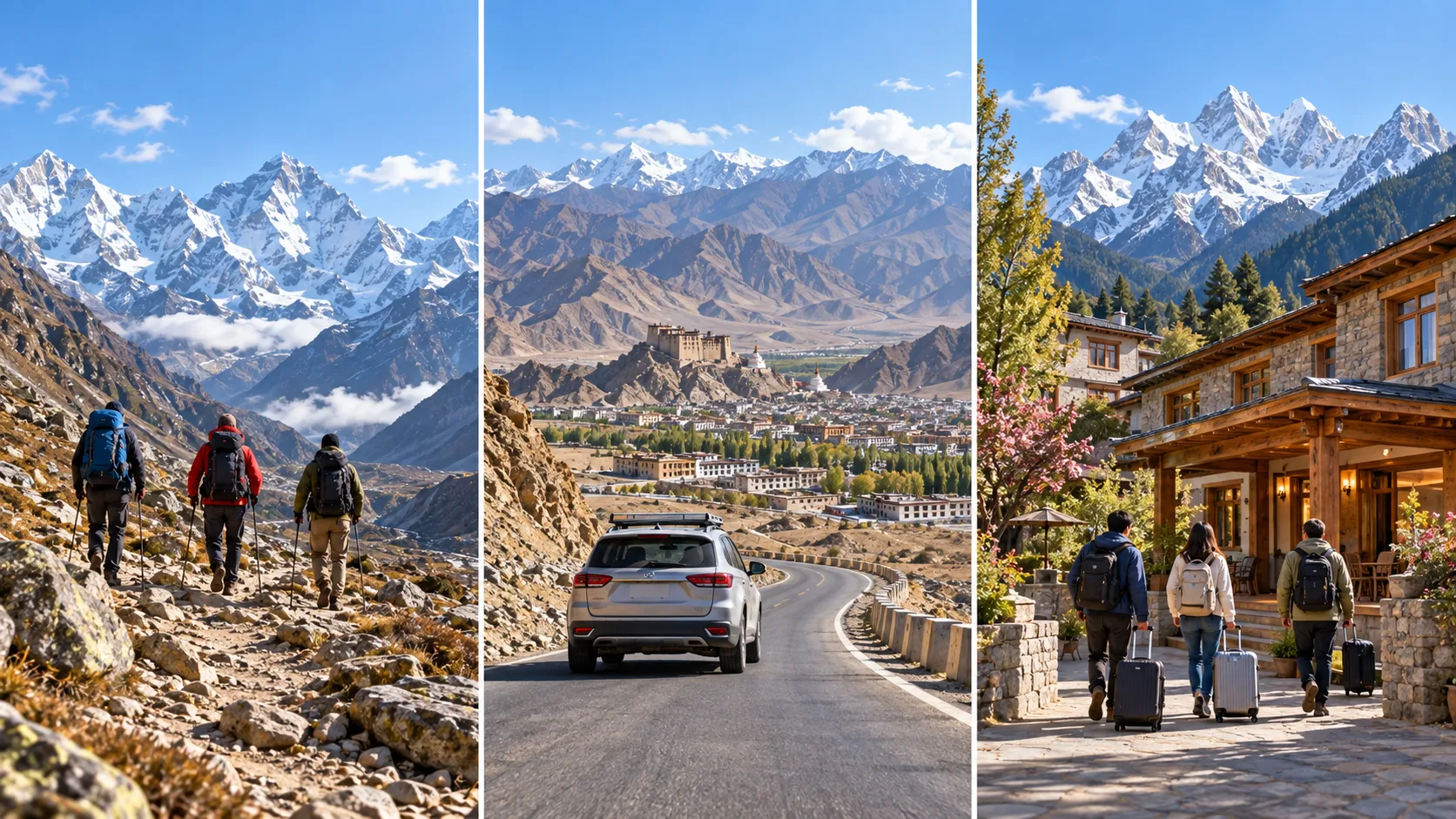
Hiking and visiting high mountains have become increasingly popular. Destinations that travelers have asked about include Mount Siguniang (四姑娘山), Bipenggou (毕棚沟), Jiuzhaigou (九寨沟), and Shangri-La City (香格里拉市) in China; Cusco in Peru; Leh in India; La Paz in Bolivia; and the Everest Base Camp trek in Nepal. These trips can involve health problems specific to high altitude. [0]
You do not need to trek to develop altitude illness. Travelers who reach high-altitude destinations by bus, train, car, or plane can also be at risk, particularly after a rapid ascent and an overnight stay. [1]
What is altitude illness?
Altitude illness is caused by ascent to high altitude; it is not a fear of heights or an allergic reaction. [1, 2]
It can occur when travelers go to about 2,500 m above sea level or higher. [1, 2] Most Thai travelers do not encounter comparable conditions at home and may be unfamiliar with the illness. [0]
Why does it happen?
The body needs time to acclimatize to the lower oxygen pressure at altitude. Without enough time, symptoms such as headache, poor sleep, and fatigue can develop. Illness can become life-threatening, especially if a person continues to ascend without recognizing or treating worsening symptoms. [1, 2, 3]
Age, sex, and physical fitness do not reliably predict who will acclimatize well. [1]
Recognizing AMS, HACE, and HAPE
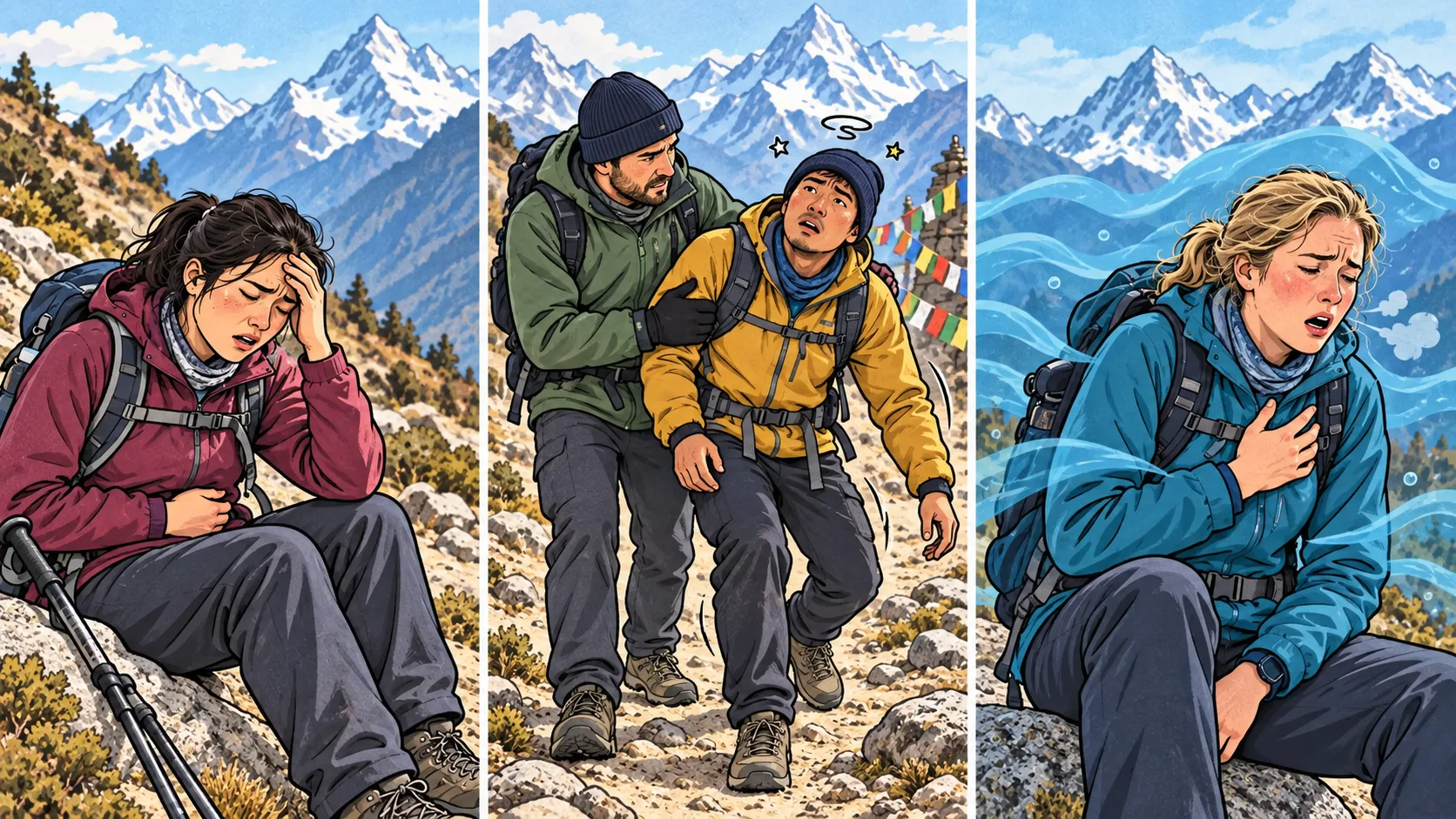
Altitude illness is commonly divided into three syndromes. [1]
-
Acute mountain sickness (AMS) usually causes headache, dizziness, nausea or vomiting, reduced appetite, and poor sleep. It resembles a hangover. Symptoms often begin about 4–10 hours after ascent, commonly during the first night. Mild symptoms can improve as the body acclimatizes over the next 1–2 days. Reports in travelers commonly describe AMS in roughly 20–30%, although the rate varies by destination and ascent profile. [1, 2, 3]
-
High-altitude cerebral edema (HACE) is a serious brain condition that can follow AMS and is uncommon below 4,300 m. Severe headache, confusion, unsteady walking, or double vision may make the person appear drunk. The affected person may not recognize the problem. Seizures, coma, and death are possible. Descend immediately and seek medical care. [1, 2, 3]
-
High-altitude pulmonary edema (HAPE) is a serious lung condition that can occur with or without AMS or HACE. Warning signs include breathlessness at rest, difficulty breathing, failure to recover with rest, cough with pink or bloody sputum, and inability to lie flat. It can be fatal. Descend immediately and seek medical care. [1, 2, 3]
Watch your own symptoms and those of your companions, especially during the first 1–3 days at altitude. Rest and acclimatization reduce the chance of severe illness. [1]
How common is AMS among Thai travelers?
A prospective study followed 362 Thai travelers who had sought pre-travel advice before visiting high-altitude destinations. 72 developed AMS: an incidence of 19.89% in this study group. Of those with AMS, 27 (37.5%) developed symptoms on the first day; the median time to onset was 2 days. [4]
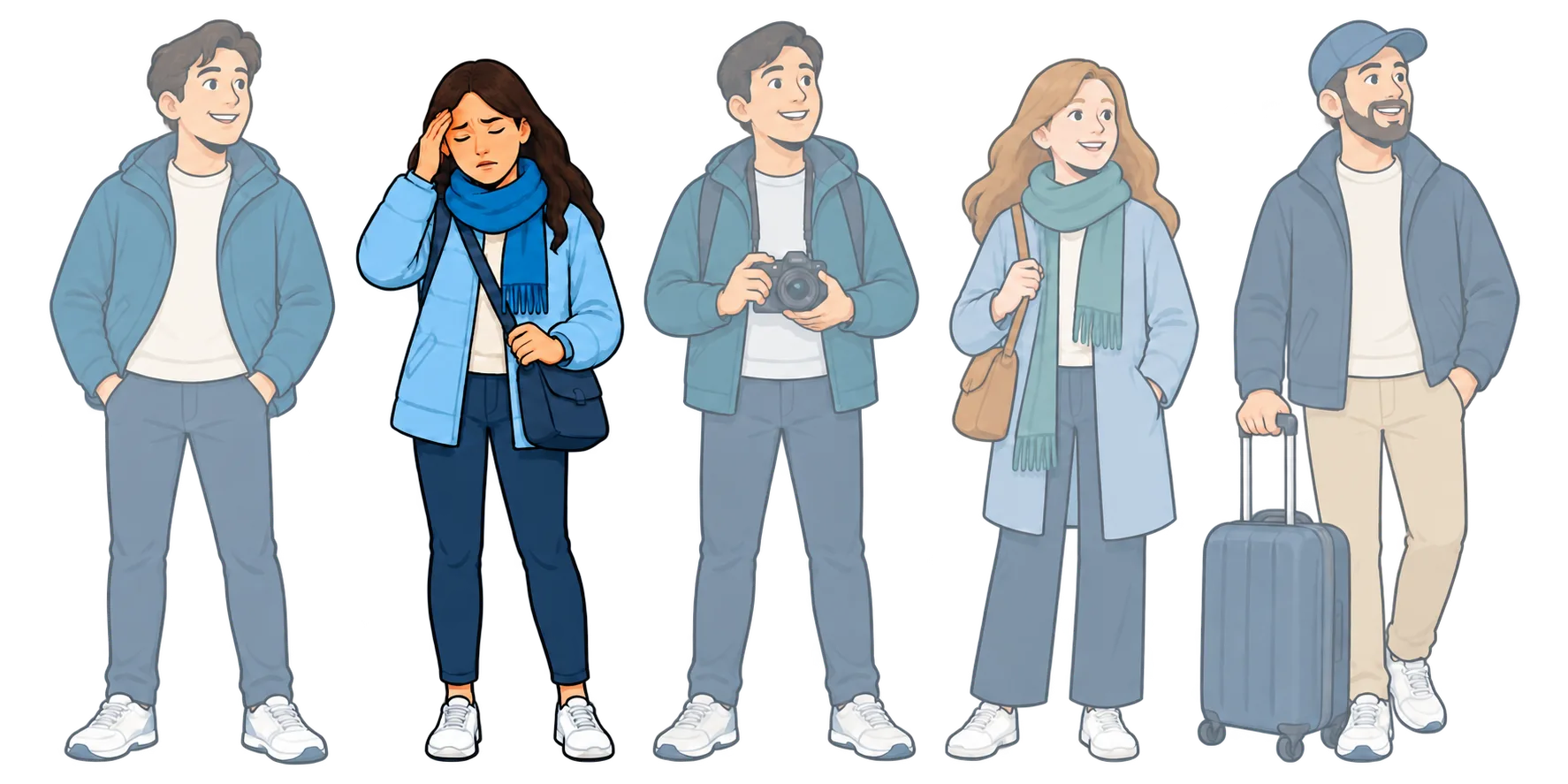
Note: Participants had sought pre-travel advice and visited different destinations. This is not a rate for all Thai travelers; the study did not report HACE or HAPE incidence. [4]
Who is at higher risk?
- Travelers who have had altitude illness before. [1, 2, 3]
- Travelers who ascend quickly, especially from below 1,200 m to a sleeping altitude above 2,750 m in one day. Flying directly to a high-altitude destination is a common example. [1, 2]
- Examples include flying from Lima to Cusco or from Chengdu to Lhasa. In some rapid-ascent situations, the rate of altitude illness can approach 50%. [1]
- Trekkers who raise their sleeping altitude by more than 500 m per day once above 3,000 m, including on some routes in Nepal. [1, 2]
How to reduce the risk
No plan prevents every case, but gradual ascent substantially reduces risk. [1]
- Choose an itinerary that does not ascend too quickly. [1, 2, 3]
- Avoid traveling from below 1,200 m to sleep above 2,750 m in a single day. [1]
- If possible, sleep at about 2,450–2,750 m for 2–3 nights before continuing higher. [1]
- Once above 3,000 m:
- Get enough rest and maintain adequate hydration. [2]
- Some travelers may need acetazolamide (Diamox) to help acclimatization. Discuss it with a doctor before the trip: the decision depends on the itinerary and medical history. Common adverse effects include tingling in the fingers, more frequent urination, and altered taste. A history of sulfonamide allergy needs assessment. Acetaminophen (paracetamol) and diclofenac should be taken at least 30 minutes apart from acetazolamide because they can impair its absorption. [1, 2, 3, 5]
For a multi-day trek, review each day’s distance, walking time, and elevation gain to judge whether the route suits your fitness. Read the Thai Travel Clinic’s trekking fitness article (Thai only).
Common misconception: Chinese herbal products
“Taking hong jing tian prevents altitude illness.”
Evidence remains insufficient: Hong jing tian (红景天; Rhodiola) is used by some travelers before ascent. A trial of Rhodiola crenulata did not find a reduction in AMS compared with placebo, and a systematic review did not establish a clear preventive effect. It should not replace gradual ascent or medical advice about preventive medication. [6, 7]
If you have reported a sulfonamide allergy
An allergy to a sulfonamide antibiotic does not automatically mean an allergy to acetazolamide. [1, 2]
| Source | Sulfonamide-allergy precaution |
|---|---|
| CDC Yellow Book [1] | Cross-reactivity between these drug groups has not been reported, but special caution is advised after anaphylaxis or with multiple drug allergies. |
| 2024 WMS guideline [2] | Acetazolamide is contraindicated after anaphylaxis to a sulfonamide or Stevens–Johnson syndrome. For other allergy histories, a supervised trial before travel may be considered. |
| Thai travel-clinic study [8] | Among 66 travelers reporting sulfonamide allergy, clinicians prescribed acetazolamide to 40 after assessing the reaction history and severity. No allergic reactions were recorded among those treated. This small retrospective study cannot establish safety for everyone. |
If you are unsure which drug caused a past reaction, or the reaction was severe, have a doctor review the history before taking acetazolamide. [1, 2]
Precautions on arrival
- Avoid alcohol for at least the first 48 hours at altitude. [1]
- If you regularly drink coffee or other caffeinated drinks, continue your usual intake. Caffeine-withdrawal headache can be confused with an altitude headache. [1]
When to seek specialist advice before travel
- Underlying conditions such as heart disease, asthma, chronic obstructive pulmonary disease, sleep apnea, anemia, thalassemia [0], brain tumors, or cerebral aneurysms warrant an individual assessment before ascent. [1]
- Pregnancy. [1]
- Recent surgery involving the eyes, bones, brain, abdomen, chest, lungs, or heart: ask the surgeon about the planned trip. [0]
What to do if symptoms develop
Symptoms at altitude can have causes other than altitude illness, so assess the situation and take the following steps. [2]
- Do not ascend higher while symptoms persist. [1, 2] If traveling in a group, companions may need to continue separately until you improve. [0]
- For a mild headache, rest. Paracetamol (acetaminophen) or ibuprofen may help. Continue ascending only after the headache resolves. [1, 2]
- If symptoms are severe—especially a severe headache, confusion, unsteady walking, inability to lie flat, pink sputum, or marked breathlessness—descend immediately, get help, and seek medical care. [1, 2, 3]
Common misconception: oxygen cans and oxygen cafés
“If I carry an oxygen can, I can inhale some when symptoms start and keep going.”
“A brief visit to an oxygen café or oxygen bar can prevent or treat altitude illness.”
Evidence remains insufficient: The WMS guideline does not establish that a brief oxygen-bar visit or oxygen from a small can prevents or treats AMS. Do not rely on either when symptoms occur. A visit to an oxygen café cannot be assumed equivalent to continuous medical oxygen treatment. Seek help and descend if symptoms are severe. [2] Thai Travel Clinic’s explanation of oxygen cans (Thai only)
Further reading for travelers who need extra planning
- Traveling with children: Taking Children to High Altitude Safely
- Travelers with type 1 diabetes: Type 1 Diabetes and High-Altitude Travel — preparing glucose checks, insulin, and an emergency plan
Where to seek pre-travel advice in Thailand
If you plan a rapid ascent, have experienced altitude illness before, or have an underlying condition, consider a consultation with a travel-medicine clinician before departure.
- Find other facilities in the Thai Travel Medicine Association directory (Thai) or the government clinic list (Thai PDF; dated 7 May 2024).
- Bangkok: Thai Travel Clinic, Faculty of Tropical Medicine, Mahidol University offers pre-travel counselling and posts its vaccine price list online.
- Nonthaburi: Travel Medicine Clinic, Bamrasnaradura Infectious Diseases Institute, Chalermphrakiat Building, 5th floor. Call 02-590-3430 or email [email protected] to confirm current services and hours.
References
- Expert opinion of the author of this article.
- CDC. Yellow Book [Internet]. 2025 [cited 2025 Oct 10]. High-Altitude Travel and Altitude Illness.
- Luks AM, Beidleman BA, Freer L, Grissom CK, Keyes LE, McIntosh SE, et al. Wilderness Medical Society Clinical Practice Guidelines for the Prevention, Diagnosis, and Treatment of Acute Altitude Illness: 2024 Update. Wilderness & Environmental Medicine. 2024 Mar 1;35(1_suppl):2S-19S. doi:10.1016/j.wem.2023.05.013
- Piyaphanee W, Matsee W, Pisutsan P, Chanthavanich P. Travel Medicine. 2nd ed. Natikul Press; 2025. (Book information page in Thai.)
- Harnnavachok A, Poovorawan K, Pan-ngum W, Mansanguan C, Muangnoicharoen S, Piyaphanee W. Incidence and risk factors for acute mountain sickness among Thai travelers to high-altitude areas. JITMM Proceedings. 2018;7:45–50.
- CDC. Medication and Vaccine Interactions in Travel Medicine. Yellow Book. 2025.
- Chiu TF, Chen LLC, Su DH, Lo HY, Chen CH, Wang SH, et al. Rhodiola crenulata extract for prevention of acute mountain sickness: a randomized, double-blind, placebo-controlled, crossover trial. BMC Complementary and Alternative Medicine. 2013;13:298. doi:10.1186/1472-6882-13-298
- Luo H, Liao X, Tang Q, Wang Q. Traditional Chinese medicine for acute mountain sickness prevention: A systematic review and meta-analysis of randomized controlled trials. Journal of Traditional Chinese Medical Sciences. 2023;10(1):73–82. doi:10.1016/j.jtcms.2022.11.008
- Charoensakulchai S, Veeramanomai T, Wittayatechakul P, Punrin S, Piyaphanee W. Management of travelers to high altitude with self-reported sulfonamide allergy: experience from a travel clinic in Thailand. Journal of Travel Medicine. Published online 2026 Sep 16. doi:10.1093/jtm/taag084
Further reading from Thai Travel Clinic (Thai only)
- Altitude Sickness #1 โรคที่ต้องระวังในพื้นที่สูง
- Altitude Sickness #2 อาการและการป้องกัน
- Altitude Sickness #3 เรื่องน่ารู้เกี่ยวกับยา Diamox (Acetazolamide)
- ข้อควรรู้ก่อนไป trekking สำหรับมือใหม่ #1
- บทความเรื่องความฟิตสำหรับ Trekking
- ความเข้าใจผิดที่พบบ่อยเกี่ยวกับการป้องกันโรคแพ้ความสูง #1
- ความเข้าใจผิดที่พบบ่อยเกี่ยวกับการป้องกันโรคแพ้ความสูง #2
Prepared by Vitchakorn Poonyakanok, MD.