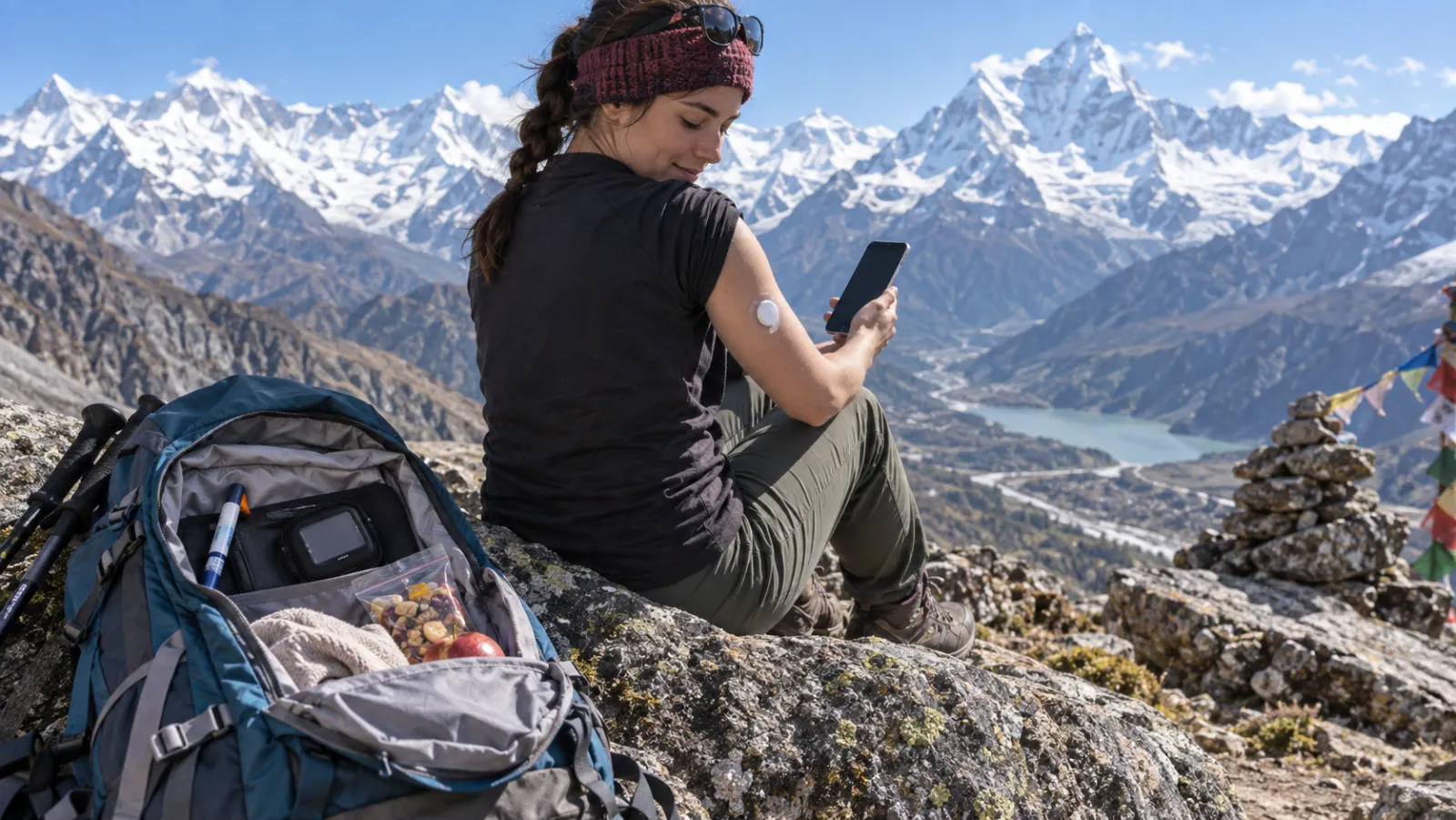
Type 1 Diabetes and High-Altitude Travel
อ่านบทความนี้เป็นภาษาไทย: เบาหวานชนิดที่ 1 กับการเที่ยวพื้นที่สูง
People with type 1 diabetes (T1DM) can travel to high altitude, but they need more preparation than the usual steps against altitude illness. Long walking days, eating less, falling ill, and the cold can all shift blood glucose or stop equipment from working normally. Current evidence does not show that diabetes by itself raises the chance of acute mountain sickness (AMS). When AMS does occur, however, its symptoms can overlap with low blood glucose, high blood glucose, or diabetic ketoacidosis (DKA). [1, 2]
This article applies to adults and is meant as a starting point for conversations in families of children with T1DM. Insulin doses, glucose targets, and a sick-day plan must be agreed with your own diabetes team before you travel.
Before the trip: rehearse the plan for real life
- Show your doctor the itinerary with the altitude of each night’s stay, along with walking distances, how remote the medical facilities are, and the route down. Plan a slow ascent with spare rest days, following the principles in the high-altitude article. [1]
- Review your glucose records, exercise patterns, meals, and insulin doses with your diabetes team. Ask for a written plan covering heavy walking days, eating little, vomiting, low glucose, high glucose or ketones, and how to reach your care team from abroad. Do not cut or raise insulin by a single formula meant for everyone: responses to exertion and altitude differ from person to person. [2, 3]
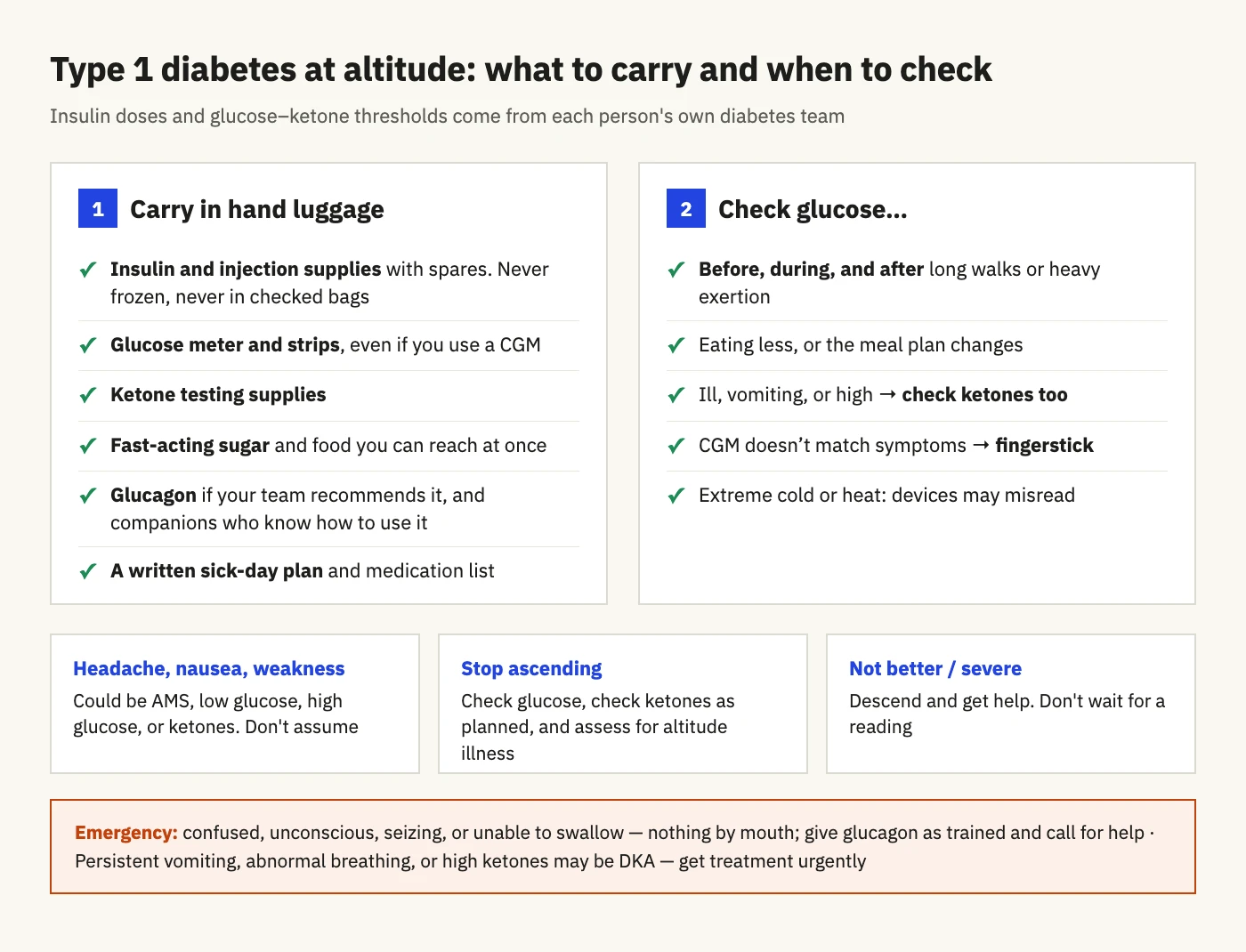
- Pack insulin, needles or delivery devices, a glucose meter and strips, ketone testing supplies, spares, fast-acting sugar, and glucagon if your care team recommends it. Make sure your companions know how to help if you cannot help yourself. [2, 4, 5]
- If you cross time zones, have your diabetes team set the timing of basal insulin and meals individually rather than simply switching to the clock at your destination. [4]
On the way: check whenever your routine changes
More exertion combined with eating less can lower glucose, but illness, missed insulin, or altitude illness can raise it and produce ketones. So do not assume that “climbing always brings glucose down” or that “altitude always pushes it up.” Check glucose before, during, and after heavy exertion or long walks, and check more often if you have symptoms or your meal plan changes. Carry food and drinks you can reach immediately, in case transport is delayed or restaurants are closed. [2, 4]
The evidence available for planning is still small. A trial that simulated an altitude of about 4,200 meters in 7 adults with T1DM found that glucose fell further than during exercise in normal oxygen, late in the exercise and afterwards, but that result cannot be used to calculate insulin for children or for every route. Meanwhile, reports from high-altitude treks and review articles describe both low and high glucose, depending on food, exertion, illness, and the insulin given. Watch your own trends during the trip. [2, 6, 7, 8]
If you use a CGM, carry a fingerstick meter as a backup, especially for readings that do not match how you feel. Some glucose meters can read inaccurately at altitude or in extreme temperatures. Check the limits of your model before you leave, and protect devices and strips from cold and moisture. [1, 2, 3]
Insulin must not freeze and should be kept out of direct heat. Carry it in your cabin bag rather than checked luggage, and do not place it directly against ice or cold gel packs. Bring a letter or medication list for security checks and for getting help if supplies are lost. [4, 9]
Headache, nausea, or weakness: do not assume it is AMS
After an ascent, headache, nausea, fatigue, or drowsiness may come from AMS, but low glucose, high glucose, ketones, dehydration, or another illness can look similar. Stop ascending, check your glucose, and check ketones as your plan directs, especially if you are vomiting, unwell, or running high, and assess yourself for altitude illness at the same time. Never let waiting for any single reading delay descent or calling for help when symptoms are severe. [1, 2, 3]
For low glucose in someone who is alert and able to swallow, give fast-acting carbohydrate according to their plan, then recheck. Young children may need a different amount from adults. If the person is confused, unconscious, having a seizure, or unable to swallow, do not give food or drink by mouth. A companion should give glucagon as trained and call for emergency help. [5]
DKA is an emergency. Persistent vomiting, being unable to drink, abnormal breathing, drowsiness, or ketones above the threshold in your care plan call for urgent treatment and a descent arranged as safely as possible. Even when you cannot eat, do not stop basal insulin on your own. Treat ketones and adjust insulin according to the sick-day plan your diabetes team has set. [2, 3]
Altitude-prevention medicines need a further step of judgment
Acetazolamide helps the body adjust to altitude, but in people with T1DM it can make acidosis or DKA harder to assess and manage. A doctor should weigh the risks of the route together with your diabetes team before you use it. The drug does not replace a slow ascent or glucose and ketone checks. Dexamethasone, used in some cases to treat severe altitude illness, can raise glucose. Emergency treatment belongs under medical supervision; do not drop a needed medicine on your own because you are worried about your glucose. [1, 2]
If the traveler is a child, read Taking Children to High Altitude Safely alongside this article. Watching for symptoms and planning a descent need to fit the child’s age.
References
- CDC Yellow Book 2026. High-Altitude Travel and Altitude Illness.
- Wilderness Medical Society. Clinical Practice Guidelines for Diabetes Management. Wilderness & Environmental Medicine. 2020.
- ISPAD Clinical Practice Consensus Guidelines 2022. Sick day management in children and adolescents with diabetes. Pediatric Diabetes. 2022;23:912–925.
- CDC. Tips for Traveling With Diabetes. 2024.
- CDC. Treatment of Low Blood Sugar. 2024.
- Dugan CW, Maloney SK, Abramoff KJ, Panag SS, Davis EA, Jones TW, et al. Effects of Simulated High Altitude on Blood Glucose Levels During Exercise in Individuals With Type 1 Diabetes. J Clin Endocrinol Metab. 2022;107(5):1375–1382.
- Malcolm G, Rilstone S, Sivasubramaniyam S, Jairam C, Chew S, Oliver N, et al. Managing diabetes at high altitude: personal experience with support from a Multidisciplinary Physical Activity and Diabetes Clinic. BMJ Open Sport Exerc Med. 2017;3(1):e000238.
- Mohajeri S, Perkins BA, Brubaker PL, Riddell MC. Diabetes, trekking and high altitude: recognizing and preparing for the risks. Diabet Med. 2015;32(11):1425–1437.
- CDC Yellow Book 2026. What To Do When Sick Abroad.
Written by Vitchakorn Poonyakanok, MD. This article provides general information. It is not a personal insulin-adjustment plan or emergency treatment plan.
Comments
Loading comments…
Author mode: replies post as the author