Ticks and Travel: What to Do Before and After a Bite
อ่านบทความนี้เป็นภาษาไทย: เห็บกับการเดินทาง: ป้องกันอย่างไร และทำอย่างไรเมื่อถูกกัด
A walk through grass, a forest hike, or a safari can bring a traveler into tick habitat. The concern after a bite depends on where the trip took place, the activity, and the tick-borne infections found locally. A tick does not need to be seen or remembered for a clinician to consider a tick-borne illness. [1]
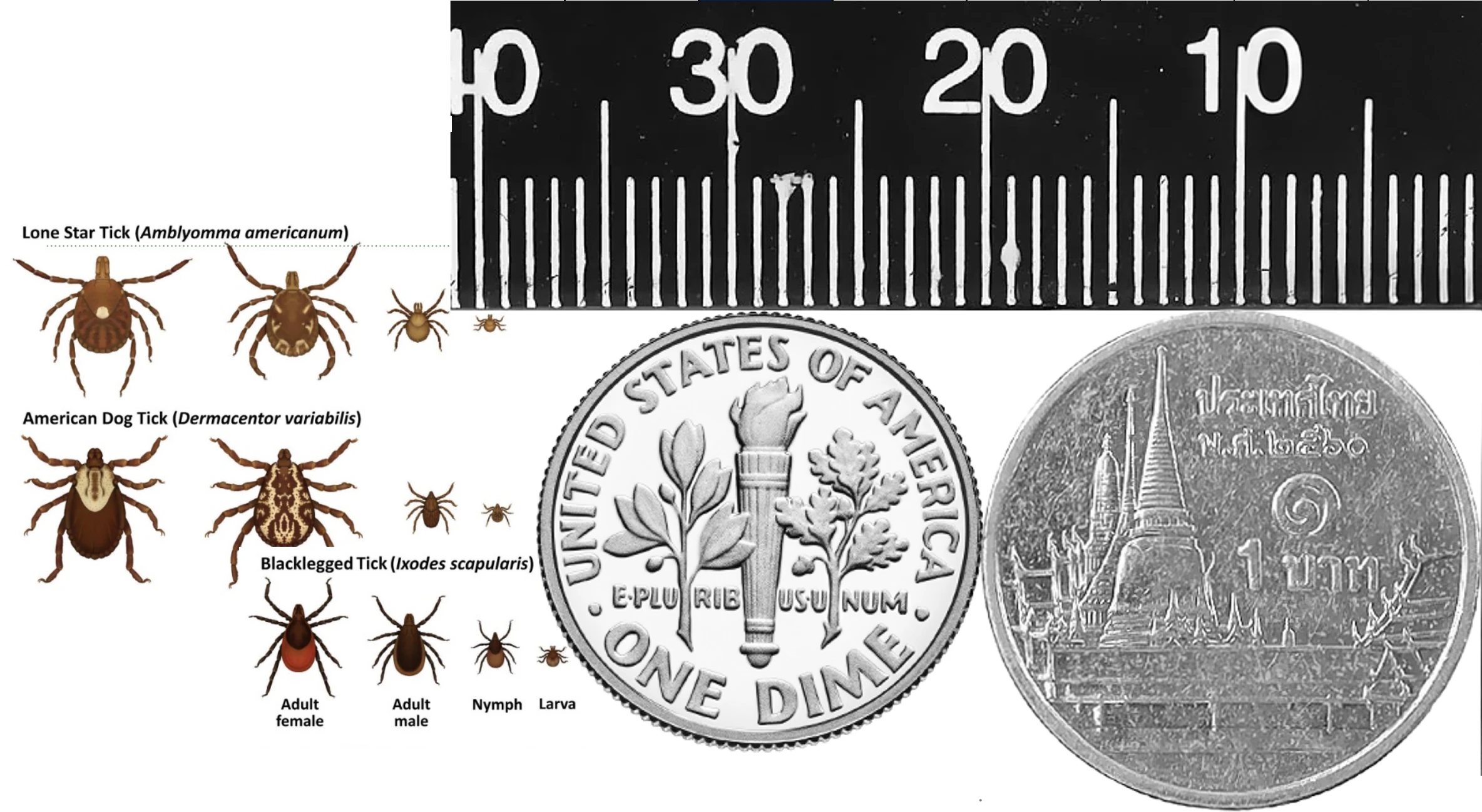
The smallest ticks can be easy to miss. This comparison shows several life stages beside a US dime and a Thai one-baht coin. The ruler is marked in millimeters. The figure helps convey size; it is not a way to identify a tick species from a bite. [2]
Tick drawings and photographs
The comparison below pairs the ten tick types shown in the source material. Use the arrows or menu to change types. Drawings make body patterns easier to see; photographs show how variable a real specimen can look. These images are not an identification key, and their sizes are not comparable across panels.
Image sources, as credited in the teaching presentation. Drawings: the eight ticks from Gulf Coast to Rocky Mountain wood tick come from the NEJM video Tickborne Diseases; the bont-legged tick from Influential Points; the Asian longhorned tick from Orkin. Photographs: the presentation credits all ten to the CDC tick-borne disease reference manual (6th edition, 2022).
See how the pictured ticks differ in host use
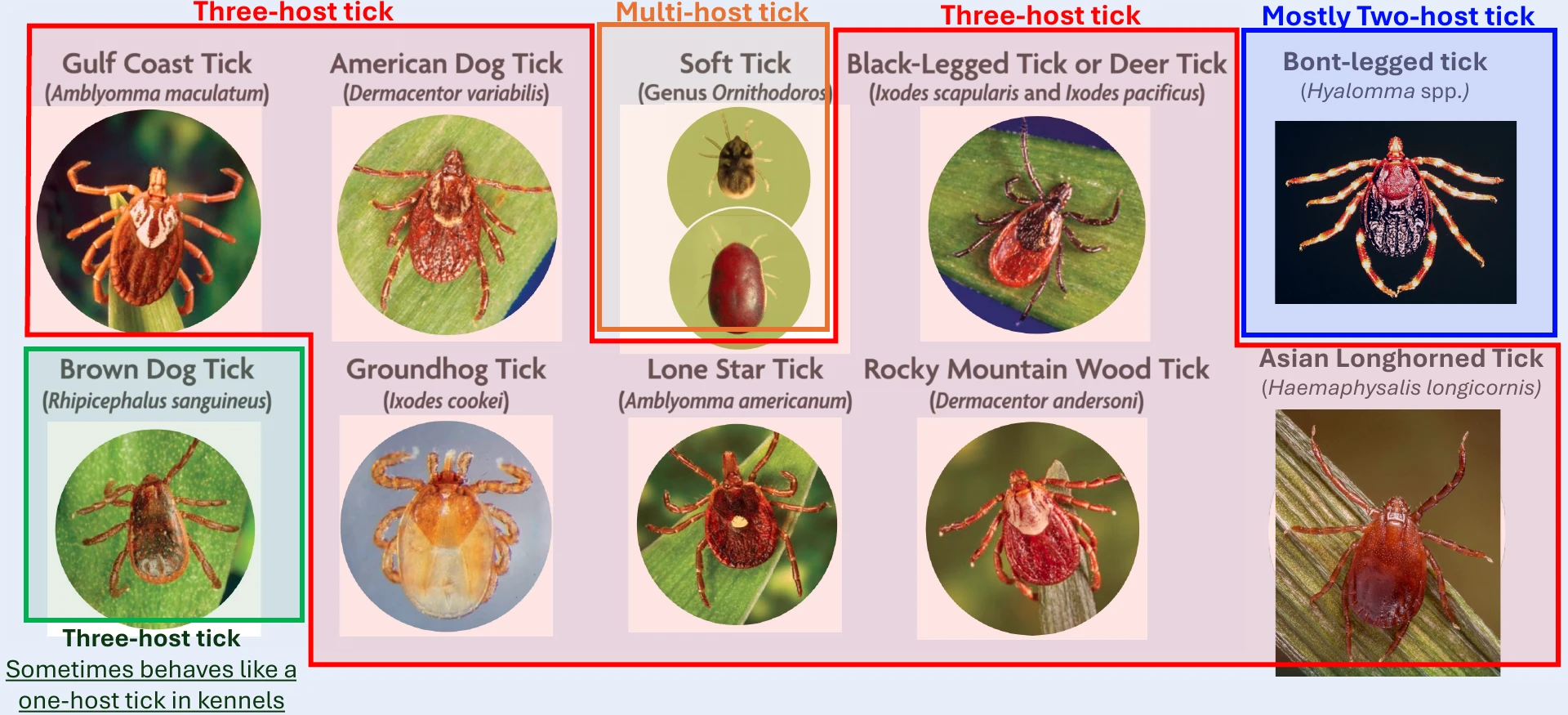
- Three-host tick
- Larva, nymph and adult each feed on a different host, dropping off to molt between meals.
- Gulf Coast, American dog, blacklegged (deer), groundhog, lone star, Rocky Mountain wood and Asian longhorned ticks, and the brown dog tick, which sometimes behaves like a one-host tick in kennels.
- Multi-host tick
- Feeds briefly, many times, on several hosts through a series of nymphal stages.
- Soft tick (Ornithodoros spp.)
- Mostly two-host tick
- Larva and nymph feed on the same host; the adult feeds on a second one.
- Bont-legged tick (Hyalomma spp.)
One bite, different diseases
Ticks can transmit viruses, bacteria, and parasites. The same symptom, especially fever, can therefore point to different diagnoses in different places. [1, 3, 4]
| Travel or exposure setting | Illness to know about | Clue that matters |
|---|---|---|
| Forest and grassland exposure in parts of Europe or northern and eastern Asia | Tick-borne encephalitis (TBE) | Fever may be followed by meningitis or encephalitis. Unpasteurized dairy is another possible exposure. [3] |
| Hiking or other outdoor exposure in places where Lyme disease occurs, including parts of North America, Europe, and Asia | Lyme borreliosis | An expanding skin lesion called erythema migrans can appear. It does not always form a textbook bull’s-eye. [2] |
| Safari, bush walking, or game hunting in sub-Saharan Africa | African tick bite fever | Fever and a dark scab at a bite site (eschar) can occur. Several travelers in one group may become ill. [1] |
| Outdoor exposure in the Americas, including parts of Mexico | Rocky Mountain spotted fever and related spotted fevers | Early fever and headache may precede a rash. Treatment is time-sensitive. [1, 5] |
| Exposure to ticks or infected animal blood in parts of Africa, the Middle East, Central Asia, or southern and eastern Europe | Crimean–Congo hemorrhagic fever | A rare but severe infection requiring urgent medical and public health assessment. [4] |
This is a travel-history guide, not a diagnostic table. Risk varies within a country and by season, habitat, and activity. Other tick-borne illnesses include anaplasmosis, ehrlichiosis, babesiosis, and severe fever with thrombocytopenia syndrome (SFTS). SFTS has also been documented in Thailand, but the reported cases do not establish a risk estimate for travelers. [1, 6]
An example from the United States
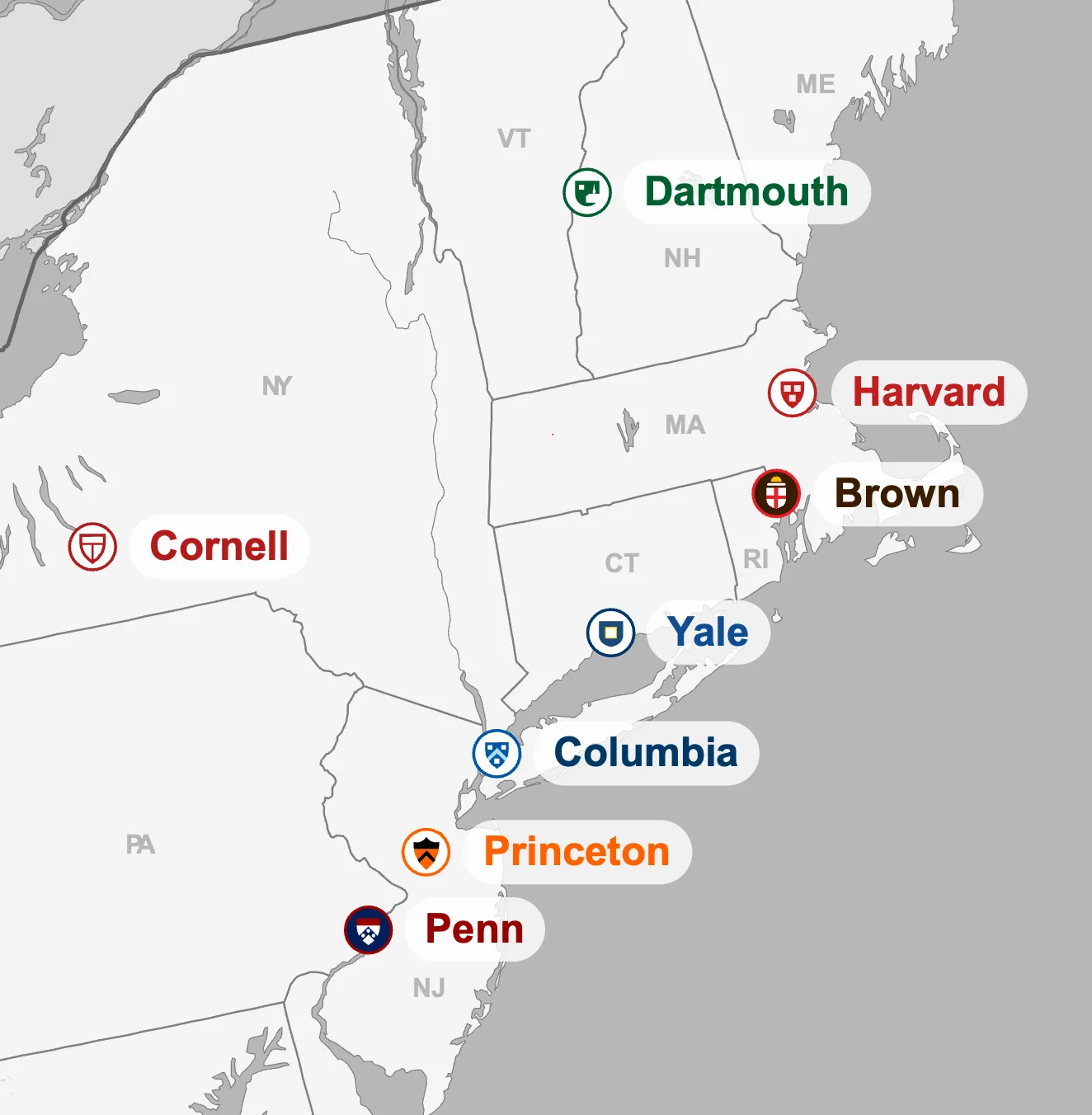
The map below marks several universities in the northeastern United States. It helps locate destinations near regions where tick-borne diseases are reported; a campus label alone says nothing about a student’s personal risk. Outdoor activities and the local habitat matter more than the university name. Compare it with the historical CDC disease maps below, then check current guidance for the exact destination. [2, 7]
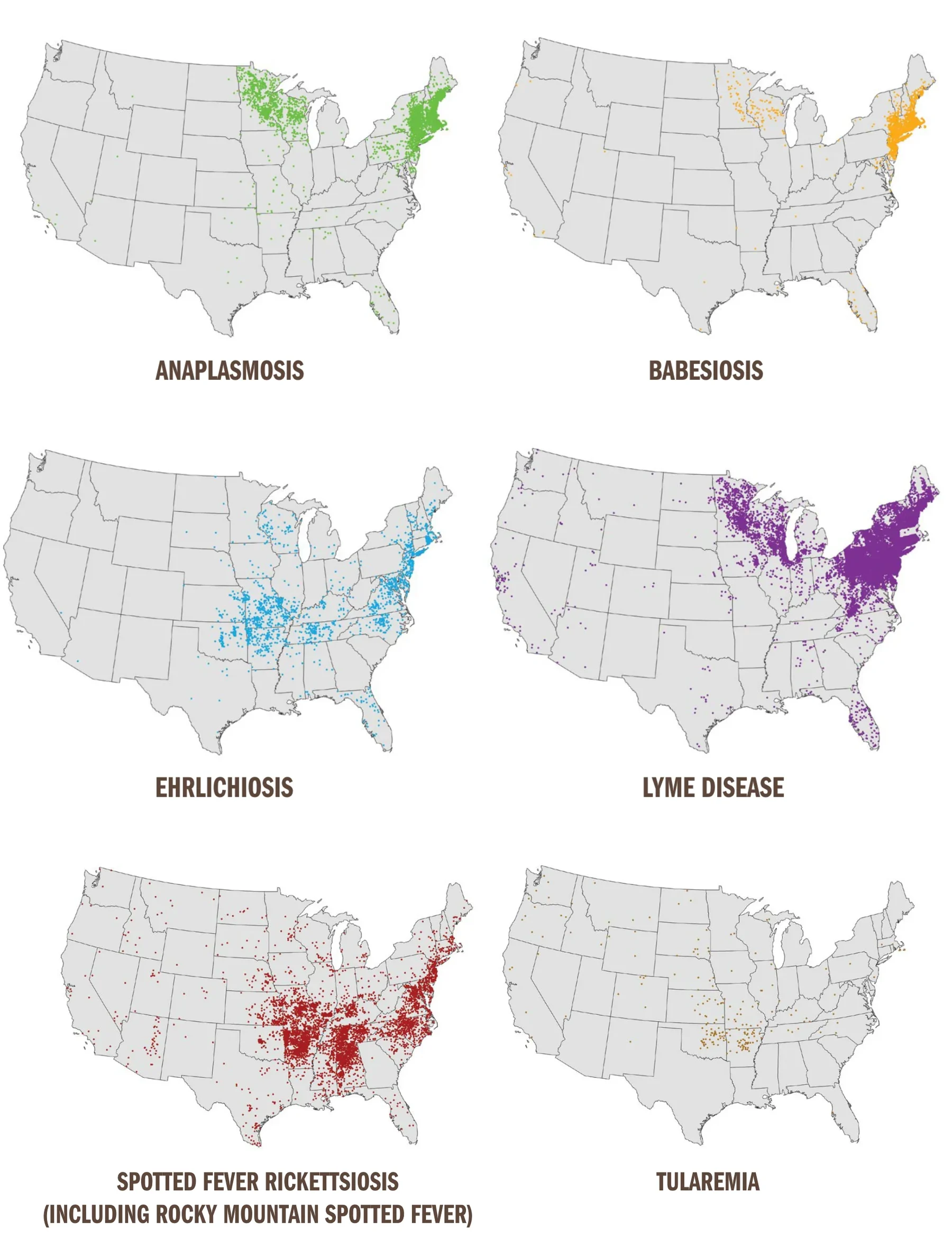
See six US tick-borne disease distribution maps
These maps were published in the CDC's 2022 reference manual. They show reported disease patterns at that time and are not a current exposure forecast for a particular trip. Select any image to enlarge. [2]
Before you go outdoors
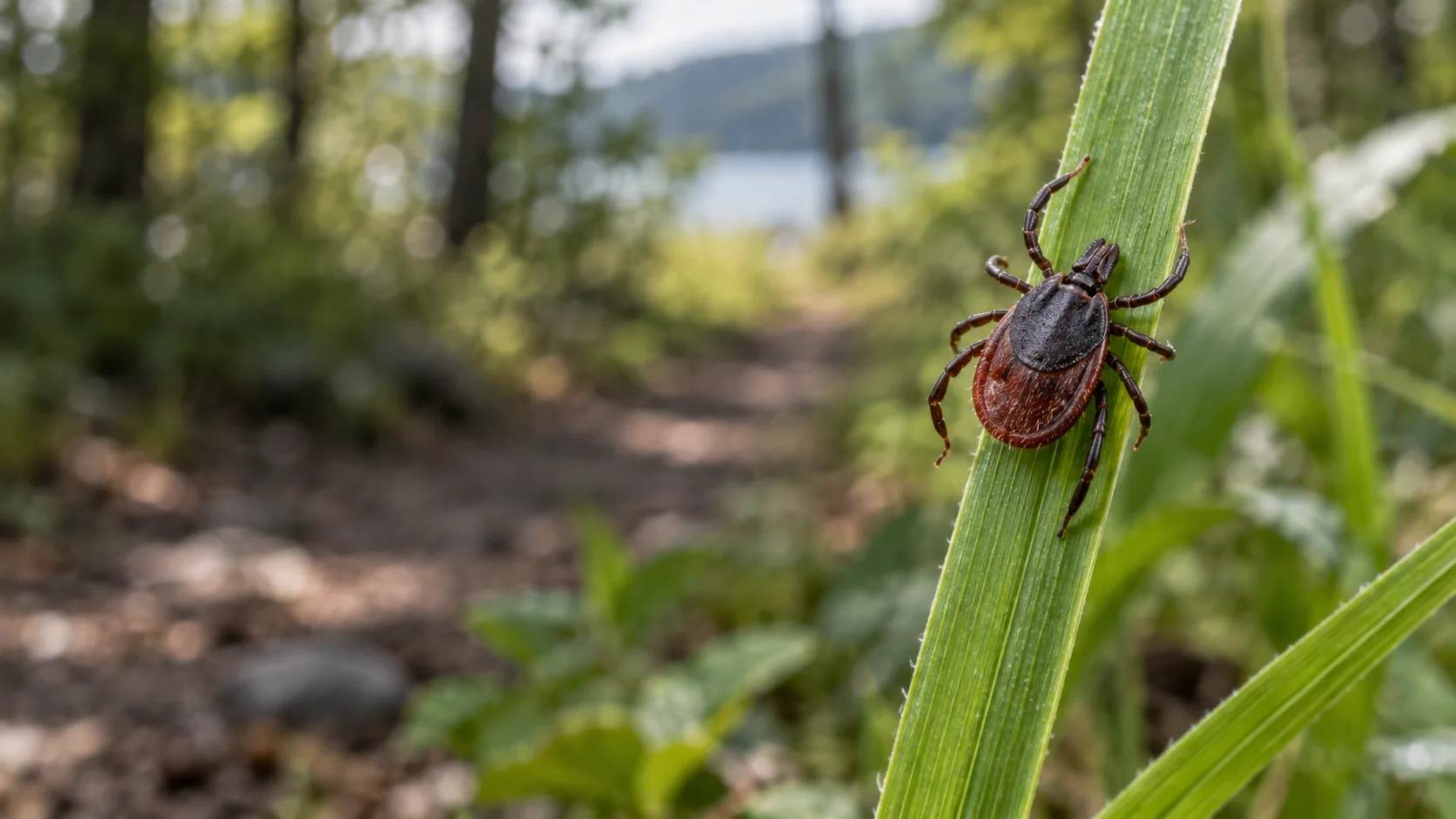
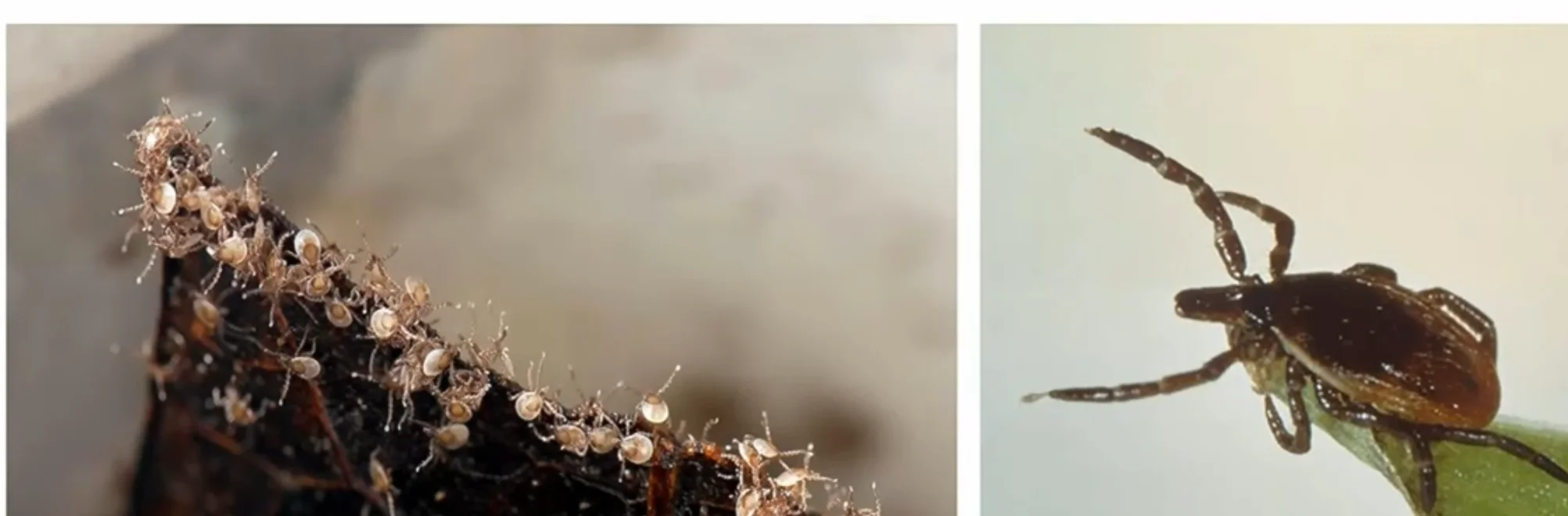
Ticks can wait on vegetation for a passing host. In the photographs below, many small ticks cluster on a plant at left; one tick rests on a leaf tip at right. [7]
- Check the exact itinerary. A city stay and several days in wooded or grassy areas can have very different exposure profiles, even within one country. Ask a travel medicine clinician about the places and activities on your route. [3]
- Use a repellent on exposed skin. Choose an EPA-registered product with an active ingredient such as DEET or picaridin and follow its label. Permethrin-treated boots, clothing, and gear provide another layer of protection; permethrin is for fabrics and gear, not skin. [7]
- Make ticks easier to find. Stay near the center of trails where possible, avoid brushing against dense vegetation, and wear clothing that covers the legs. [7]
After you come indoors
- Check clothing, gear, and pets. Ticks can ride indoors on clothing, coats, daypacks, and pets, then attach later. To kill ticks on dry clothing, tumble dry on high heat for 10 minutes; damp clothes need longer. If clothes need washing first, use hot water, because cold or medium-temperature water does not kill ticks. [7]
- Shower soon after coming indoors. Showering within two hours has been shown to reduce the risk of Lyme disease and may reduce other tick-borne infections. It washes off unattached ticks and is a good time for a tick check. [7]
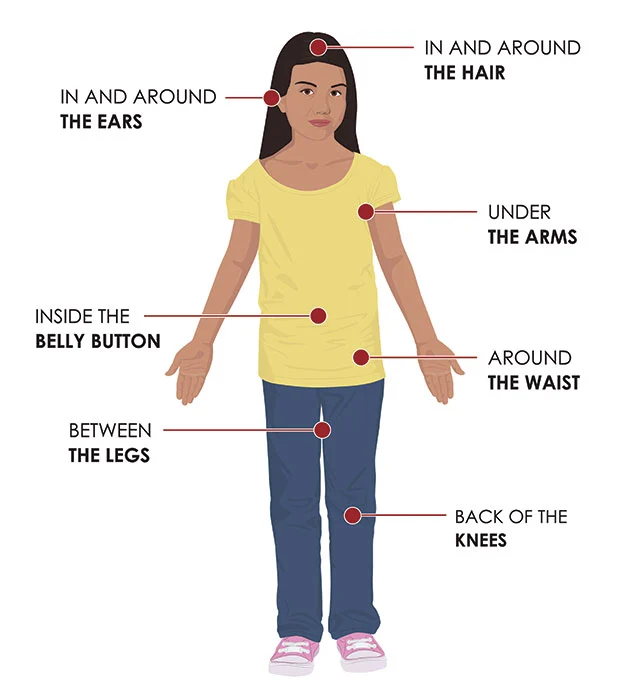
- Do a full-body check, using a hand-held or full-length mirror, after any time in tick habitat, including a garden. Check yourself and your children in and around the hair and ears, under the arms, inside the belly button, around the waist, between the legs, and behind the knees. [7]
Does the trip call for a TBE vaccine?
TBE vaccine is a destination- and exposure-specific decision. CDC recommends it for people moving or traveling to a TBE-endemic area who expect extensive tick exposure from their planned outdoor activities and itinerary. It may be considered for some others who may enter tick habitat. Discuss it well before departure because the primary series takes multiple doses. The vaccine does not replace bite prevention or protect against other tick-borne infections. Avoid unpasteurized dairy products in TBE risk areas. [3, 8]
If you find an attached tick
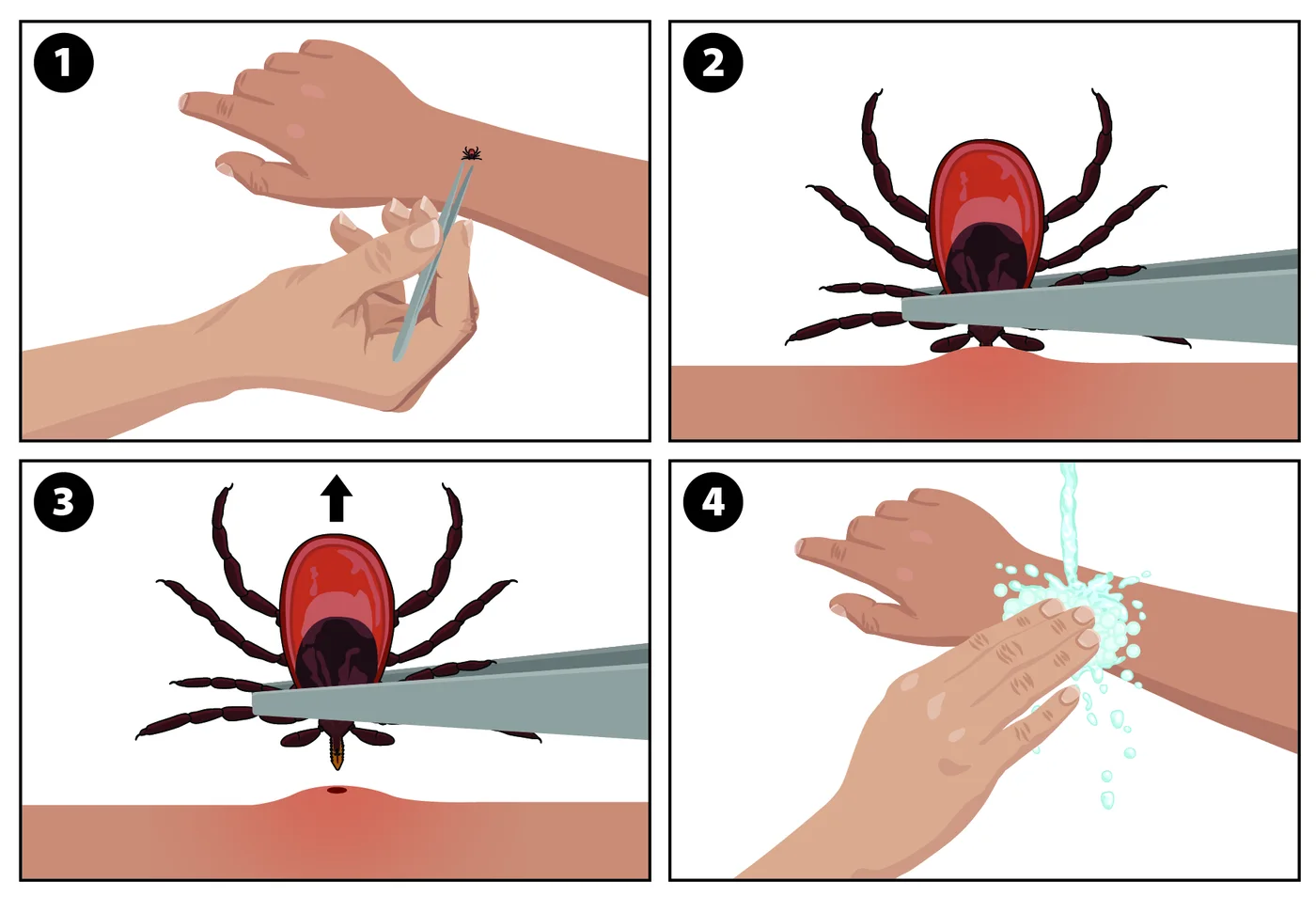
- Remove it promptly. Grasp it as close to the skin as possible with clean fine-tipped tweezers. Pull away from the skin with steady, even pressure. Do not twist or jerk. [9]
- Clean the bite and your hands with soap and water, rubbing alcohol, or hand sanitizer. Check the rest of your body for other ticks. [9]
- Record when and where the exposure happened. If a rash or fever develops over the following days or weeks, that information helps the clinician assess the risk. A photo of the tick or skin lesion may be useful, but do not delay removal to take one. [9]
CDC’s interactive Tick Bite Guide walks through removal, how long the tick was attached, and symptoms, then suggests when to seek care. It was written for the United States, so check local advice for other destinations. [10]
Petroleum jelly, heat, nail polish, and similar methods are not recommended for detaching a tick. Routine commercial testing of a removed tick should not guide treatment: a positive result does not prove infection in the person, and a negative result can falsely reassure. [9]
Should everyone take an antibiotic after a bite?
No. A clinician may consider a single preventive dose of doxycycline for Lyme disease after a high-risk bite in an area where Lyme disease is common, if the criteria are met and it can be given within 72 hours of tick removal. This is a narrow Lyme prevention decision, not a general prescription for every tick bite or protection against the other diseases above. Ask promptly if you think your exposure might qualify. [11]
Can children take doxycycline?
Yes, when indicated, including children under eight. For Lyme disease prevention after a tick bite, CDC says a single dose can be used in children of any age only when the bite meets the high-risk criteria. For suspected Rocky Mountain spotted fever, CDC recommends prompt doxycycline treatment for patients of all ages. Concern about tooth staining should not delay that treatment: short courses used for this illness have not been shown to stain permanent teeth. A clinician should assess the indication, dose, and any reason doxycycline may be unsuitable for the individual child. [11, 12]
When to get medical care
Seek care if you develop fever, a new or expanding rash, severe headache, an unusual dark scab at a bite site, or other new illness after likely tick exposure. Tell the clinician every place you visited, your outdoor and animal exposures, and when symptoms began. You may not remember a bite. [1, 9]
Seek urgent care for confusion, a stiff neck, bleeding, fainting, or rapidly worsening illness. A clinician should consider other causes of fever after travel as well, including malaria when the itinerary makes it possible. Suspected spotted fever rickettsiosis needs prompt treatment based on clinical suspicion; waiting for a rash or laboratory confirmation can be dangerous. [1, 5, 13]
References
- CDC Yellow Book 2026. Rickettsial Diseases.
- CDC. Tickborne Diseases of the United States: A Reference Manual for Healthcare Providers, 6th ed.
- CDC Yellow Book 2026. Tick-Borne Encephalitis.
- CDC Yellow Book 2026. Zoonotic Exposures: Bites, Scratches, and Other Hazards.
- CDC. About Rocky Mountain Spotted Fever.
- CDC Emerging Infectious Diseases. Severe Fever with Thrombocytopenia Syndrome Virus Infection, Thailand, 2019–2020.
- CDC. Preventing Tick Bites.
- CDC. Tick-borne Encephalitis Vaccine Information Statement.
- CDC. What to Do After a Tick Bite.
- CDC. Tick Bite Guide. 2024.
- CDC. Lyme Disease Prophylaxis After Tick Bite.
- CDC. Clinical Care of Rocky Mountain Spotted Fever.
- CDC Yellow Book 2026. Post-Travel Evaluation of the Ill Traveler.
Prepared by Vitchakorn Poonyakanok, MD. This article provides general travel health information; individual care depends on the itinerary, symptoms, and medical history.
Comments
Loading comments…
Author mode: replies post as the author